
Vertical Bike Parking: Why It’s Challenging and What Works Now
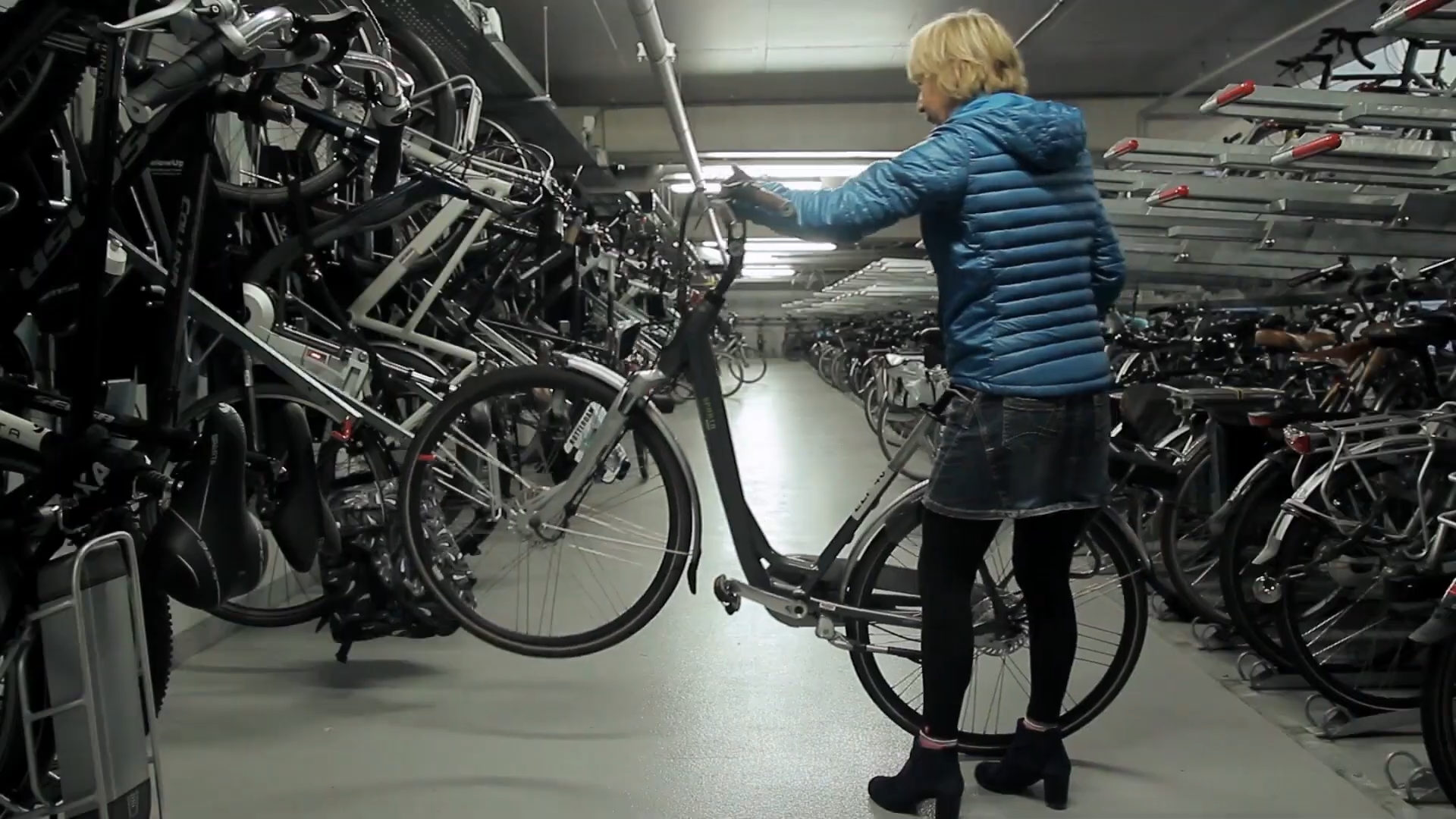
Vertical-only bike parking used to look space-efficient. But modern bikes are heavier, longer, and harder to lift, so vertical-only rooms often turn into cluttered, unsafe spaces that people avoid. A better answer is a mixed layout when you have room, or lift-assist vertical systems when you need density without forcing riders to deadlift their bikes overhead.
Key Takeaways
- Vertical-only rooms don’t match today’s bikes.
- Heavier bikes + overhead lifting = higher injury risk.
- Messy bike rooms reduce use and discourage cycling.
- Mixed layouts work best when space allows.
- Lift-assist vertical racks keep density without the strain.
The New Reality
For years, vertical bike parking has been the go-to solution for architects and building managers alike. It appeared space-efficient for existing buildings trying to meet demand, and it was ideal for new developments where every square foot matters.
But North America has changed. The bikes people ride, and their expectations have evolved and overall gotten more demanding. As a result, vertical-only bike parking is simply not meeting the needs of cyclists today.
Heavier, Bigger Bikes, Higher Expectations
The modern “cyclist” is commuting on a completely different bike than a decade ago. E-bikes, long-tail cargo bikes, and fat-tire models have become mainstream, and they’re much heavier than traditional road or hybrid bikes.
- Bikes are Heavier: E-bikes include motors and batteries that can weigh as much as 70 lbs (32kg).
- Bikes are Bigger: Fat Tire, Long-tail, Cargo, Trailer bikes are designed for passengers and distance, with their extended frames, they need 3 ft × 10 ft (0.9 m × 3.0 m and that doesn’t even address the amount of manoeuvring space they need.
- You just can’t lift that safely!
What was once perceived as efficient has now become a physical risk that not only limits accessibility but also deters use.
What’s Happening in Vertical-Only Bike Rooms
In buildings that rely exclusively on vertical racks, the issues are obvious:
Riders with the above-mentioned style bikes:
- leave them leaning against walls or blocking aisles.
- avoid the room entirely, choosing to store their bikes in units, offices, or unauthorized areas.
- decide not to ride their bikes at all as the infrastructure is just not there to support them.
The result is risk of injury and messy spaces that basically discourage cycling. Spaces meant to support active transportation end up underused, frustrated, and hazardous.
The Challenge for Architects and Building Managers
Many cities are catching on.
Most new regulations and policies developed over the past 5 years limit the percentage of vertical racks allowed in new developments and some have even lowered or dropped car parking requirements altogether.
All with the goal to encourage more flexibility and better bike parking.
However, too many new developments and existing bike rooms remain dominated by vertical parking as a way reduce space and related cost.
How do we maintain high-density bike storage while making it accessible for everyone?
Rethinking Bike Room Design
It’s time for architects, interior designers, and building owners to re-evaluate what “good” bike room design really means.
Space efficiency is still critical, but functionality needs to become the top priority.
- Designing bike rooms for a full range of modern bicycles and riders.
- Where space allows, mixed-format layouts that include horizontal and two-tier options should be considered first before implementing vertical solutions.
- Less space efficiency comes with a higher cost, safety, risk, convenience and functionality.
We are all familiar with double-tier racks and standard horizontal bike parking solutions that certainly achieve a better experience for the rider, but in some instances, where retrofitting space isn’t an option.
There are Unique Parking Solutions that solve and mitigate this.
Most notably, a vertical lift-assist system is a practical bridge between old layouts and new realities.
- These lift-assist vertical rack systems use a simple pneumatic mechanism that is based on the same principle that opens the hatchback of a minivan.
- Lift-assist racks make it possible to easily raise the heaviest of e-bikes, long tail and even cargo bikes with minimal effort.
We are all familiar with double-tier racks and standard horizontal bike parking solutions that certainly achieve a better experience for the rider, but in some instances, where retrofitting space isn’t an option.
The Future of Bike Parking
As cycling is an integral part of urban mobility, the spaces we design must evolve too.
The next generation of bike rooms needs to prioritize accessibility and usability, not just density.
Whether it is rethinking layouts or incorporating lift-assist technology, future-ready facilities will make bike parking intuitive and easy to use for every rider.
Because the goal isn’t just to store bikes, it is to support, encourage and enable people to ride them.
Want to learn more? Reach out anytime.
We love a good conversation.
Cheers!
The Kinetic Team